This film narrates the story of a childhood friendship torn apart by divergent political beliefs – one friend staunchly supports Modi and his ideologies, while another vehemently opposes, revealing the intricate dynamics of every relationship amidst the polarized political landscape of contemporary India.
Childhood friends Chintu and Bablu grapple with a profound ideological rift amidst India’s politically charged landscape. Chintu passionately aligns with Prime Minister Modi, embracing the polarizing Hindutva principles propagated by the BJP and RSS. His fervor for a unified Hindu identity clashes with Bablu’s vehement opposition to the extreme narrative, seeing it as a threat to India’s pluralistic ethos.
As political tensions escalate, their friendship unravels against the backdrop of divisive rallies and strained family gatherings. The narrative explores the delicate dynamics of relationships in a polarized society.
“India’s Fractured Bonds” delves into the human cost of political polarization, capturing the complexities of evolving identities and friendships within contemporary India’s charged political climate.
This compelling film delves into the dark pages of history to unravel the shocking truth behind the Maliyana Massacre, a harrowing incident that occurred on May 23, 1987, in Uttar Pradesh, India.
The Maliana Massacre, a tragic chapter in the history of communal violence, saw 72 innocent lives, all of them Muslims, brutally taken by a mob and personnel of the Provincial Armed Constabulary (PAC). After an agonizing 36-year wait for justice, a district court in Uttar Pradesh acquitted all 38 accused on the grounds of inadequate evidence in March 2023.
This film retraces the steps of this horrific event. I have tried to leave no stone unturned, meeting all the key stakeholders, including survivors, accused individuals, lawyers, police officers, and journalists who were present at the scene in 1987. Through meticulous investigation, the documentary seeks to unveil the true culprits responsible for this gruesome and senseless massacre.
The Maliyana massacre unfolded against the backdrop of the riots in Meerut district, Uttar Pradesh, in May 1987. Sparked by tensions surrounding the disputed Babri Mosque, clashes between Hindu and Muslim communities erupted in Meerut city on May 17. Two days later, as curfew was imposed in the city, the state government deployed 11 companies of the Provincial Armed Constabulary (PAC) to restore peace. However, disturbingly, the PAC launched attacks on Muslims across the district instead.
On May 22, the PAC descended upon Hashimpura, rounding up 42-45 Muslim men who were subsequently taken away in a truck, shot dead with .303 rifles, and their lifeless bodies discarded in the Ganga nahar (canal) and Hindon river. In a significant development in October 2018, the Delhi High Court sentenced 16 former PAC personnel to life imprisonment for the “targeted killing” in Hashimpura.
Maliyana, a village situated approximately 10 km west of Meerut town, had a population of 35,000 at the time, including about 5,000 Muslims who lived in close-knit communities. On the 23rd of May 1987, the PAC, accompanied by hundreds of locals wielding guns and swords, descended upon Maliana—the very next day after the Hashimpura killings. They blockaded all five entry and exit points of the locality and unleashed a horrifying massacre, claiming the lives of 72 Muslims. Eyewitnesses recount that “death was raining from all sides, and no one was spared, including children and women.”
Survivor accounts further shed light on the grim reality. Yameen, a survivor, mourns, “Nine of my family members were killed, and my house was set on fire. Police and rioters did it together.” Momina, another survivor, painfully shares, “I had a big family of 22 people. They mercilessly slaughtered them all. My father, mother, nieces, nephews, and siblings were among the people cruelly murdered in my family. Many of them were hiding in a well. They were crushed with stones in that well.”
Hari Shankar Joshi, one of the first journalists to reach the scene, recalls the gruesome incident, saying, “Burnt-out shells of houses and a handful of survivors sheltering in another charred hovel greeted me. People were numb and in fear. In their shaky voices, they told me that it was the PAC who killed the majority of them.”
“In communal riots, two opposing parties attack each other. But in this case, only Muslims were killed, only Muslim houses were set on fire, only Muslim survivors continue to wait for justice. The other community was not harmed, and no one was injured. So, how could this episode be called a ‘riot’?” questions Vakeel Ahmed, another survivor.
Due to the involvement of the police themselves, Yaqub Ali, a resident of Maliana severely injured in the attack, was brutally coerced into signing a document that he later discovered was an FIR. This ‘FIR’ listed 93 people as the accused in the massacre, all of them local residents, with no police personnel named.
Colin Gonsalves, a senior lawyer, concludes, “This FIR went missing, and the regular proceedings of the court couldn’t start for 34 years. Thanks to the appeal filed by journalist Qurban Ali and retired police officer Vibhuti Narain Singh, the lower court began hearing the case and hurriedly pronounced the judgment without examining the evidence.”
Survivors have now appealed in the Uttar Pradesh High Court against the judgment of the lower court.
Making a name for myself in Bollywood has been my childhood dream. I came to Mumbai in 2001 with that dream. Here I met thousands like me who had left their homes and families in search of success and stardom in the biggest film industry on Earth. But, for most, the quest leads to disappointment and sometimes…tragedy. From the day one in Mumbai I wanted to narrate the story of these people who work anonymously behind the scene dreaming of fame one day. As it happened, I moved to Doha, Qatar in 2007 and never got a chance to tell that story. However, in 2017, while I was directing/producing Gaon, I again met and lived with many of those dreamers and urge to narrate their story came back. Covid delayed the shoot for a couple of years, but finally it happened –
With a yearly revenue of over USD 2.7 billion, Bollywood is flourishing. Yet, the majority of its workers live and work in pitiable, highly insecure and unhygienic conditions. Most struggle to eke out a living and are denied of any basic human rights or dignity.
The struggle for survival is not exclusive to the film industry In India. Throughout the country, the fight for a half-decent wage is a constant reality; for the miners of Chhattisgarh to the workers of the Gujrat’s textile factories or the tea vendors on the sides of the roads. But, Bollywood has something no other industry has… the dreamers.
More films are produced in India than any other country in the world; almost 2,000 films each calendar year. By far dwarfing Hollywood’s output. As a culturally significant and prosperous industry it attracts thousands of aspiring artists, actors, dancers and technicians from across the country’s wide diaspora of cultures and multifaceted society.
Fewer than one percent of those who dream of making it big will even come close to achieving their goal. The vast majority of junior actors, background dancers, stuntmen, assistants, spot boys, light handlers, etc.… move from film to film, assignment to assignment. They have no job security, no benefits, no insurance. The pay is often paltry, delayed and at times there is no payment at all.
“the problem is that most people confuse Bollywood with a club of some 50-odd people who are always in the media focus, while the real people who slog are grossly neglected,” says Ankit Sharma, a 27-year-old junior actor.
It is an industry with overwhelming nepotism. Who you know carries a lot more weight than what you know. The situation for women can be even more desperate. They are often forced to exchange sex for work. While the children of celebrities are groomed for stardom and tailor-made debuts, outsiders have to fend off lecherous men and contend with a grueling routine of auditions and rejections.
Conversations with any ‘struggler’ is filled with; “I have a project in the pipeline” or “talks are happening”. There is a constant wait for the slightest sliver of a chance. Convinced that if only luck favoured them, they will be the next ‘big thing’.
Mukesh K Aggrahari, 33, a graduate with honours from Delhi University, has been a struggling actor for 11years. ‘My receding hairline doesn’t deter me,‘ he says. ‘By this time next year, God willing, I will have become a star’.
A sports academy in a remote village in India’s Bihar state where girls are striving for sporting glory. Laxmipur, a remote village in India’s eastern state of Bihar, is the home of one of India’s few girls’ football teams. India’s Offside Girls, follows the team as they train at the Laxmibai Sports Club and prepare for a match with the local boys’ football team. It is a social exploration into the lives of young women who are passionate about a sport they have been told was only for men. They are supported in this by Coach Sanjay Pathak, a schoolteacher in his early 40s who taught himself how to coach football by watching YouTube lessons. Pathak then started after-school sport sessions to train the girls in the school where he taught. Lacking support from the school, he moved the training facility to his family’s agricultural land and used part of his salary to fund the club that he named after the famous freedom fighter and Maratha queen, Laxmibai. Pathak is determined to continue, even in the face of the patriarchal mindset of village elders, who are offended by girls venturing out to train wearing sports gear. “What are girls born for? They’re born to be someone’s daughter-in-law one day,” says one of the villagers. In the past decade, the Laxmibai Sports Club has produced a number of national-level football players including Putul, Tara, Antima, Amrita and Nisha.
This film is inspired by the true story of my village in Jharkhand, India. Once in this remote and isolated community, villagers coexisted like members of a large extended family where they maintained a unique way of life—mellow and harmonious, celebratory and united. With the passage of time and the evolution of modernity, government and private agencies alike made inroads into this simple community, throwing open the floodgates of drastic change which would come to erode the very fabric of village society.
With the arrival of new institutions such as government schools, a police force, and a banking system, money began pouring in from this wave of development projects. The village entered a transformatory phase, coming to possess many of the same amenities found in modern urban centers around the world. Citizens disengaged from one another, growing progressively private, limiting interaction, and keeping to themselves and their families. The agricultural way of life and the traditional spirit of self-sufficiency were shunned in favor of reliance on government support or the earnings of a single family member working in the city.
With such pervasive change, the very nature of what the village once was seems to have vanished. Regrettably, so many villages across India share the same story of erosion. This film is an attempt to pack 200 years of India’s history into two hours of cinema. Herein, The Village called Bharatgaon, is itself the protagonist whose character unrecognizably transforms given events transpiring around and in it. Bharatgaon and lead male character Bharat serve as metaphors for the state of India, though representing diametrically opposed interpretations while simultaneously residing within one nation – competing, confronting, and falling for each other. This film is the outcome of those encounters.
‘My Own Private Bollywood’ is done following me while I work on my debut hindi feature film GAON.
GAON is inspired by the true story of my village in Jharkhand, India. Once in this remote and isolated community, villagers coexisted like members of a large extended family where they maintained a unique way of life—mellow and harmonious, celebratory and united. With the passage of time and the evolution of modernity, government and private agencies alike made inroads into this simple community, throwing open the floodgates of drastic change which would come to erode the very fabric of village society.
With the arrival of new institutions such as government schools, a police force, and a banking system, money began pouring in from this wave of development projects. The village entered a transformatory phase, coming to possess many of the same amenities found in modern urban centers around the world. Citizens disengaged from one another, growing progressively private, limiting interaction, and keeping to themselves and their families. The agricultural way of life and the traditional spirit of self-sufficiency were shunned in favor of reliance on government support or the earnings of a single family member working in the city.
With such pervasive change, the very nature of what the village once was seems to have vanished. Regrettably, so many villages across India share the same story of erosion.
This film is an attempt to pack 200 years of India’s history into two hours of cinema. Herein, The Village called Bharatgaon, is itself the protagonist whose character unrecognizably transforms given events transpiring around and in it. Bharatgaon and lead male character Bharat serve as metaphors for the state of India, though representing diametrically opposed interpretations while simultaneously residing within one nation – competing, confronting, and falling for each other.
‘My Own Private Bollywood’ is quite a personal film in a way!
My grandfather was a BCCL miner in Jharia. My father’s face illuminates when he talks about his childhood days in Jharia. Half of my village lived in this town working for BCCL. I have been a constant visitor since the far back time my memory takes me.
This is where I went to a cinema hall first time ever. It was Deshbandhu Talkies. Film was Umrao Jaan. I was 8 years old. And my journey as a filmmaker began…mesmerized, overwhelmed and wowed in the dark hall of Deshbandhu!
There are innumerable personal memories I have with Jharia. Times I spent with my uncle who used to live there, my several relatives, cousins, lazy days, dark nights and the smell.
I got caught up with life…education, job, family…you know! It took me 15 years to visit Jharia once again. It was 2015. And my beloved Jharia… was no more!
Ghanudih, where most of my relatives lived had turned into a vast pit of open cast mining. A large part of my childhood was buried in those flaming mines. Fire had spread everywhere. People had no where to go. Almost a million were turned refugee. For a year I tried to trace the people I knew from Jharia. Few I found. Most had disappeared. This is their story –
India, with its 1.2 billion people, is astoundingly diverse in virtually every aspect of social life – ethnic, linguistic, regional, economic, religious, class and caste.
As a filmmaker, I am fascinated by my country’s ability to find harmony in so much diversity.
I wanted to tell the story of an India that belongs to each and every one of those 1.2 billion. And what better place to do that than a hospital that treats people from every section of society? A place where illness is an equaliser.
We chose Narayana Health because it is one of those Indian stories that brings the country’s differences together in one place. It is a microcosm and, for me, the hospital became not only my film set, but also a character in itself.
In 2011, we spent four months at Narayana, shooting 24 hours a day, seven days a week, and ended up producing six films – our original Indian Hospital series. We met a variety of characters from all walks of life, who told us their incredible stories.
In late 2013, we decided to revisit those characters.
But why revisit a story?
After finishing the first series, I had kept in regular touch with our characters. Over two years, many of their stories took the most unexpected turns. I waited until I felt our original series began to feel like a half-told story. And then I had no option but to continue our journey with the people we had met back in 2011.
India spends less than one percent of its GDP on healthcare. Public healthcare is almost non-existent. Indian households shoulder about 80 percent of the country’s total healthcare burden from their own pockets. This is astonishing, because seven out of 10 Indians live on less than $2 per day. For these people, Narayana offers hope.
I was born and raised in one of India’s most remote villages. People in my village have died of completely curable illnesses, because medical help was hard to reach or afford.
My own grandfather and uncle passed away, on their way to the nearest hospital, which was 50km away. These experiences make Indian Hospital an incredible journey for me.
When I saw people with threadbare clothing, who could not afford food or a home, coming to Narayana and not being treated as outcasts, it gave me hope; especially since right beside them, shoulder-to-shoulder, were some of India’s richest.
It was not meant to become a film in the first place. I was only trying to help Marappa track his sister, in the beginning, knowing almost nothing about his past. Generally, people avoid discussing children’s past with them at Bornfree as it might open some traumatic wounds. One day after the ‘Indian Hospital’ shoot I landed at Bornfree with my camera. All the kids were practicing for their upcoming performance. On their request, I shot part of their practice session. And then left with Marappa and Mioi for our Laxmi search. That day we were going to meet some of Marappa’s relatives, whom Marappa did not want to go near to. While talking about them he informed us that his father had taken a debt of three lakhs rupees before his death from his relatives and now they want him to repay it. They will capture and make him slave if he goes near them. I was shooting Marappa while he was talking about his relatives. I decided to ask a little more about his parents and the film started from there.
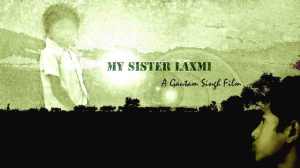
Set in 2012, the film pivots on a 12-year-old stray, Marappa, who had a brutal childhood. His mother was burnt to death and his father abused him sexually before making him beg for survival. His sister Laxmi who is his constant companion and close confidant has gone missing since his childhood.
Once his father dies, Marappa is left with Rs. 300,000/ debt. Unable to pay this huge amount, Marappa is left with no option but to run away from his home. He wanders homeless for some time before getting picked up by Mioi Nakayama, a social activist. She brings Marappa to a special school called Bornfree, where art is practiced to help children forget their past traumas.
Although Art does help Marappa in dealing with his tragic past, he misses his sister. He decides to find her at all costs. Mioi joins him in his daring expedition. They begin their search in Bangalore not knowing how far this journey will take them, and in a country of 1.2 billion, it seems almost impossible. On their way, they meet several characters with their own intriguing stories.
Mainly, this film narrates the story of missing children in India. Nearly 11 children go missing in India every hour and at least four of them are never found. Many studies point out that children are often abducted by their own relatives for ransom or child slavery before being made to beg or work as bonded labor. Many get sexually exploited and sometimes they are even used as child soldiers or combatants in armed conflicts. This film epitomizes the story of missing children through Laxmi.
The idea of doing a series in an Indian Hospital came from Paul Roy. I decided to join him when he selected Narayana Hrudyalaya for this. I always believed in the business model of Dr. Devi Shetty and wanted to do at least one film explaining this model. So here came my opportunity.
We shot in Bangalore and around it for almost five months not giving single day a miss. Everyday we were following someone. Firstly we focused on Narayana and Devi Shetty. Most of our first month shoot happened in the hospital itself. But then we started following our characters to their homes and villages. Baby Hatesam was the first one we zeroed on. He was unique not because of the kind of disease he had got. But because his parents were told by their relatives that it is easier to produce another baby than getting Hatesam cured. Although his parents chose to ignore their advice and stood with Hatesam, they were always in a dilemma about how far and how much. And perhaps it was not just them. Millions of Indians live with same sort of dilemma every day, where they have to choose between their survival and whom to survive with.
After coming back everyday from shoot, we all used to sit in the garden of Ramee hotel at Attibele (this is where the crew stayed) for some drinks and unwind. And at that time usually hospital and its people will automatically become our most favorite topic. Most of our jokes will surround around Laxmi, Dr. Rajgopalan, Dr. Krishna, trainee doctors and nurses. That is when I realized that hospital itself can evolve as a character and people working there can represent it. We decided to follow these characters and today spread through all six episodes they helped tremendously to make this series a huge success.
As always choosing characters were the most difficult thing. It happened sometime that we followed someone extensively and then dropped him/her because it was not exciting enough. Slowly we developed a method. We started doing a small screen test (just asking questions about his/her personal life) kind of thing if we decide to follow someone. Then we will watch his/her footage many times back in our hotel and take a final call.
We mostly shot this entire series in reality show style. We followed our character almost everywhere. On an average we were shooting almost 3-4 hours a day. But I will act like butcher every evening while sitting on edit table. I was keeping only what I was very sure to use. Rest were deleted immediately. That helped us immensely in final edit.
I spent almost a year doing this series. It was one of the most beautiful years I ever had perhaps. I saw life and death almost on a daily basis from very close distance and had chance to shoot them most often. Life has definitely taken a positive turn since then and have started believing in god and his plans little more than ever…thanks to Dr. Shetty…ha!
 Gautam Singh